Technical Explanation of the Comparison
Deep plane facelift vs SMAS facelift in Sydney is a common comparison for patients considering surgical facial rejuvenation. Both techniques aim to improve midface descent, jowls, and neck laxity. However, they differ in how the surgeon accesses and mobilises facial tissues and which anatomical layers the lift primarily targets.
A/Prof Tim Papadopoulos (FRACS) performs facelift surgery in Sydney using individualised planning based on facial anatomy, ageing pattern, skin quality, and patient goals. During consultation, Dr Tim explains the differences between deep plane and SMAS facelift techniques, including suitability, scarring, recovery, risks, and realistic outcomes. Importantly, results vary between individuals.
Why the Deep Plane vs SMAS Question Matters
Facelift surgery is not simply “skin tightening.” Instead, modern facelifts focus on restoring facial support and improving facial balance. Therefore, understanding the difference between deep plane facelift vs SMAS facelift helps patients:
-
choose a technique that matches their anatomy
-
understand the likely longevity of results
-
set realistic expectations about midface improvement
-
appreciate differences in recovery and risk profile
What Is the SMAS?
The SMAS (Superficial Musculoaponeurotic System) is a key supportive layer of the face. It connects the facial muscles to the overlying soft tissues. Importantly, facelift techniques often involve repositioning this layer to create a longer-lasting, more natural result.
In a practical sense, facelift methods differ by:
-
whether the SMAS is lifted separately or together with deeper tissues
-
how much ligament release occurs
-
how the midface is mobilised
-
where tension is distributed (skin vs deeper tissues)
What Is a SMAS Facelift?
A SMAS facelift is a facelift technique where the surgeon lifts and repositions the SMAS layer to improve jowls, jawline definition, and lower face ageing. While there are multiple SMAS variations, common approaches include:
-
SMAS plication (folding and suturing the SMAS)
-
SMAS imbrication (overlapping SMAS for tightening)
-
SMASectomy (removing a portion of SMAS)
In general, a SMAS facelift:
-
improves the lower face and jawline
-
provides good neck improvement (in selected patients)
-
may deliver limited midface lift depending on technique
-
can work well in appropriately selected patients
What Is a Deep Plane Facelift?
A deep plane facelift is an advanced facelift technique that repositions deeper facial tissues by working beneath the SMAS in the “deep plane.” This allows the surgeon to mobilise the midface more effectively and lift the cheek and jowl complex as a unit.
A deep plane facelift typically involves:
-
release of key retaining ligaments (in selected patterns)
-
mobilisation of deeper facial tissues rather than relying on skin tension
-
improved midface elevation in suitable patients
-
strong correction of jowling and jawline laxity
As a result, deep plane techniques often suit patients with:
-
significant midface descent
-
deeper nasolabial folds (selected patients)
-
pronounced jowls
-
ageing changes that extend beyond the lower face
Deep Plane Facelift vs SMAS Facelift: Key Differences
1) Midface Lift
A deep plane facelift often offers improved midface elevation in suitable patients. By contrast, some SMAS facelift variations focus mainly on the lower face.
Deep plane: more midface mobilisation
SMAS: variable midface effect depending on approach
2) Nasolabial Folds
Neither technique “erases” nasolabial folds completely, because these creases are partly structural. However, deep plane methods may improve them in selected patients by lifting deeper tissues.
Deep plane: often improves fold depth more noticeably
SMAS: improvement is possible but variable
3) Tension Distribution and Natural Look
Both techniques can produce natural results when performed well. However, deep plane techniques may reduce reliance on skin tension, which can support a more natural soft tissue drape.
Deep plane: less skin-only tension, deeper repositioning
SMAS: depends on technique; some methods place more tension on skin
4) Longevity
Longevity depends on anatomy, lifestyle, and technique execution. However, deeper support restoration may provide longer-lasting improvement in selected patients.
Deep plane: potentially strong longevity in suitable patients
SMAS: also long-lasting, especially with strong SMAS support
5) Technical Complexity
Deep plane facelift surgery requires advanced anatomical knowledge, precision, and experience. Therefore, surgeon training and expertise strongly matter.
Deep plane: technically demanding
SMAS: broader technique range, complexity varies
Which Technique Is Better?
There is no single “best facelift.” Instead, the best facelift is the one that matches your:
-
anatomy
-
ageing pattern
-
skin quality
-
facial proportions
-
goals and preferences
-
comfort with scarring and recovery
Therefore, Dr Tim discusses whether deep plane facelift vs SMAS facelift is best for you during consultation rather than applying a one-size-fits-all approach.
Suitability: Who May Benefit from Deep Plane Facelift?
Deep plane facelift may suit patients who have:
-
midface descent (cheek droop)
-
deeper jowls
-
heavier facial tissues
-
more advanced ageing changes
-
desire for strong structural repositioning
Suitability: Who May Benefit from a SMAS Facelift?
A SMAS facelift may suit patients who have:
-
lower face ageing (jawline and jowls)
-
mild-to-moderate laxity
-
good skin quality
-
desire for a tailored approach based on tissue thickness
Recovery and Important Considerations
Recovery varies depending on the extent of surgery and the combination of procedures (e.g., neck lift, fat grafting, blepharoplasty). However, typical recovery involves:
-
swelling and bruising early in recovery
-
progressive improvement over weeks to months
-
scar maturation over time
-
staged return to exercise and full activities
Importantly, facelift outcomes can continue to refine for several months.
Risk Reduction and Surgical Standards
Facelift surgery requires advanced technical skill and risk management. Dr Tim’s approach prioritises:
-
anatomical precision
-
conservative planning
-
meticulous haemostasis
-
protection of facial nerve structures
-
scar placement strategy
-
post-operative monitoring and safety protocols
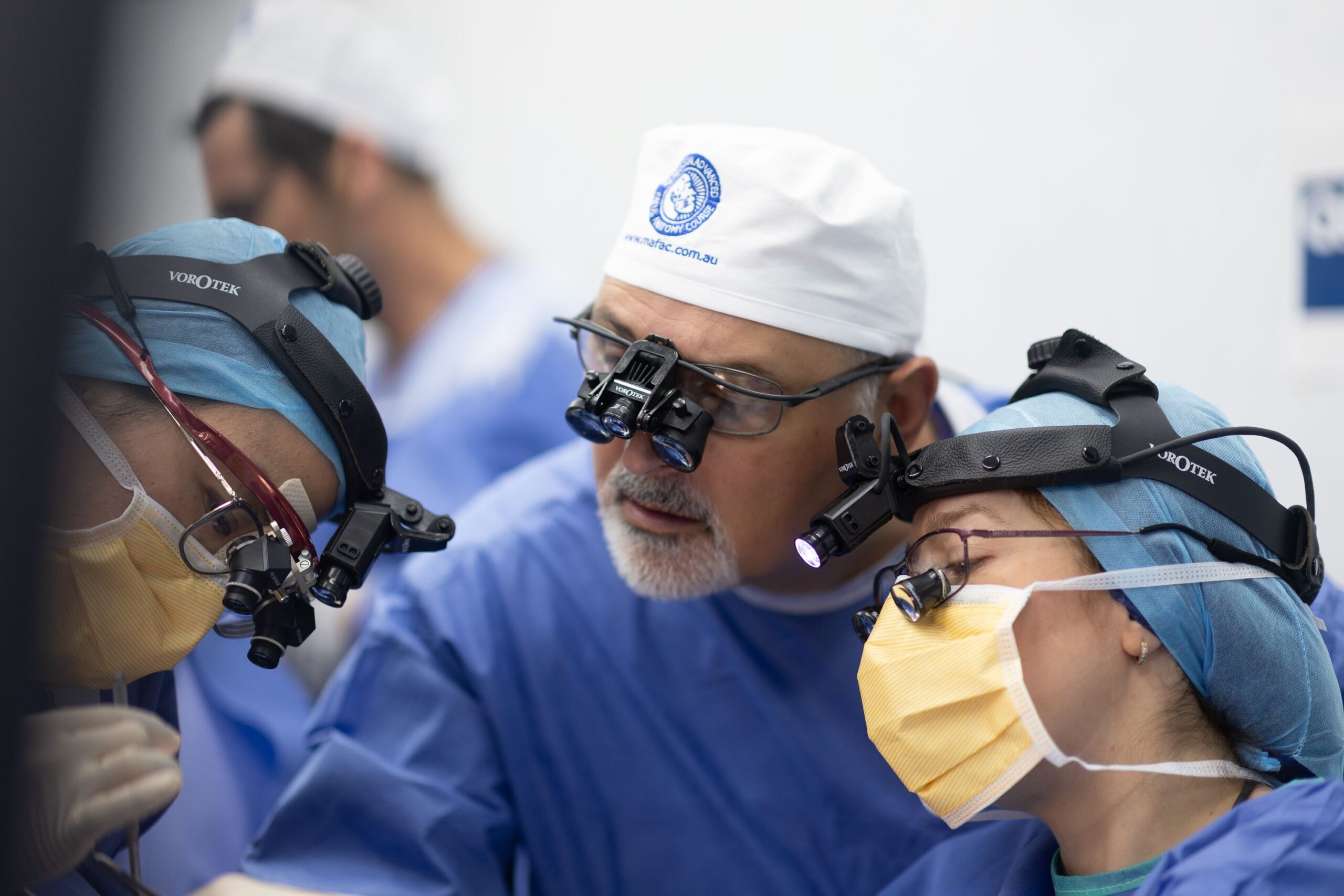
In addition, A/Prof Tim Papadopoulos is a faculty member of the Melbourne Advanced Facial Anatomy Course (MAFAC), teaching facial anatomy and facelift-related techniques. This strengthens the anatomical framework required for safe, precise facelift surgery.
Suitability for Deep Plane Facelift vs SMAS Facelift Sydney
Suitability for deep plane facelift vs SMAS facelift in Sydney is confirmed during consultation. Dr Tim evaluates:
-
facial ageing pattern
-
skin elasticity and thickness
-
midface vs lower-face descent
-
neck anatomy (if combined)
-
medical suitability and healing capacity
Disclaimer:
All surgical procedures carry inherent risks. The information provided here is general in nature and should not be used as a substitute for an in-person consultation with a qualified specialist. Individual outcomes vary based on anatomy, healing, and adherence to post-operative care. A/Prof Tim Papadopoulos will discuss the potential risks, benefits, and realistic expectations during your consultation.
Safety, training and professional standards
A/Prof Tim Papadopoulos is a Specialist Plastic Surgeon (FRACS) and is registered with the Australian Health Practitioner Regulation Agency (AHPRA). He is also a member and Past President of the Australasian Society of Aesthetic Plastic Surgeons (ASAPS).
Patients can also consult the Royal Australasian College of Surgeons (RACS) for information on surgical training and standards.